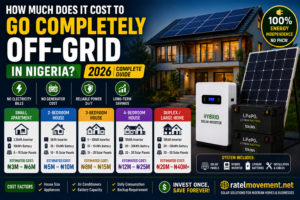
If you own a 4-bedroom house and are planning to switch to solar energy, one of the first questions you’ll likely ask is:
How many solar panels do I need?
The answer depends on several factors, including your electricity consumption, inverter size, battery storage capacity, and whether you want basic backup power or a fully solar-powered home.
Many Nigerian homeowners either install too few solar panels and struggle with charging problems or spend far more money than necessary on oversized systems.
This guide explains exactly how many solar panels a typical 4-bedroom house in Nigeria needs in 2026.
Why Proper Solar Panel Sizing Matters
Your solar panels perform two important functions:
- Power household appliances during the day
- Recharge batteries for overnight use
When solar panels are undersized, you may experience:
- Slow battery charging
- Low battery warnings
- Poor night-time backup
- Increased generator usage
A properly sized solar array helps maximize system performance and battery lifespan.
How Much Electricity Does a 4-Bedroom House Use?
Electricity usage varies significantly from one household to another.
Light Usage Household
Appliances:
- Refrigerator
- Television
- Fans
- Lights
- Router
Daily Consumption:
5–8kWh
Average Family Home
Appliances:
- Refrigerator
- Deep freezer
- Multiple TVs
- Fans
- Lighting
- Router
- Laptops
Daily Consumption:
8–15kWh
Heavy Usage Home
Appliances:
- Multiple refrigerators
- Deep freezers
- Water pump
- Washing machine
- Home office equipment
Daily Consumption:
15–25kWh
Luxury Home
Appliances:
- Multiple air conditioners
- Water pumps
- Large entertainment systems
- Home automation
Daily Consumption:
25kWh+
Solar Production in Nigeria
Nigeria receives excellent sunlight throughout most of the year.
Most regions receive:
4.5–6 Peak Sun Hours Daily
For system calculations, many installers use:
5 hours per day
as a practical average.
Solar Panel Calculation Example
Let’s assume a household uses:
10kWh daily
Calculation:
10kWh ÷ 5
= 2kW Solar Capacity
Adding 25–30% for system losses:
2kW × 1.3
= 2.6kW
Required solar capacity.
How Many 550W Solar Panels Do I Need?
Modern installations usually use:
- 550W panels
- 600W panels
- 700W panels
For a 2.6kW solar array:
2.6kW ÷ 550W
= 4.7 panels
In practice:
5–6 panels minimum
However, most 4-bedroom homes require significantly more capacity.
Recommended Solar Panels by Usage Level
Light Usage Home
Recommended:
6–8 Solar Panels
Suitable for:
- Refrigerator
- TV
- Fans
- Lighting
Average Family Home
Recommended:
8–14 Solar Panels
Suitable for:
- Refrigerator
- Deep freezer
- Multiple TVs
- Fans
- Router
- Small appliances
Heavy Usage Home
Recommended:
12–20 Solar Panels
Suitable for:
- Multiple refrigerators
- Water pumps
- Freezers
- Home office equipment
Air Conditioner Usage
Recommended:
16–30+ Solar Panels
depending on the number of AC units.
Before installing ACs, read:
How to Size Solar Panels for Air Conditioners in Nigeria
Recommended Solar Panels by Inverter Size
Many homeowners size solar arrays according to inverter capacity.
2.5kVA System
Typical Solar Panels:
4–8 Panels
Suitable for very light household loads.
5kVA System
Typical Solar Panels:
8–14 Panels
Suitable for many 4-bedroom homes with moderate electricity usage.
For appliance capability, see:
What Can a 5kVA, 10kVA and 15kVA Solar System Power?
10kVA System
Typical Solar Panels:
15–24 Panels
Suitable for:
- Large family homes
- Duplexes
- Homes with ACs
15kVA System
Typical Solar Panels:
25–40 Panels
Suitable for:
- Luxury homes
- Large properties
- Heavy appliance users
Battery Capacity Matters Too
Solar panels recharge batteries.
Larger batteries require larger solar arrays.
Typical recommendations:
| Battery Capacity | Recommended Solar Panels |
|---|---|
| 5kWh | 4–6 Panels |
| 10kWh | 8–12 Panels |
| 15kWh | 12–18 Panels |
| 20kWh | 16–24 Panels |
| 30kWh | 24–36 Panels |
To size correctly, read:
How to Calculate Battery Capacity for Your Solar System
Best Solar Setup for a Typical 4-Bedroom House
For most Nigerian families, a balanced setup includes:
- 5kVA or 10kVA Hybrid Inverter
- 10–20kWh Lithium Battery
- 10–18 Solar Panels
This setup comfortably powers:
- Refrigerator
- Deep freezer
- Multiple TVs
- Fans
- Lighting
- Router
- Security systems
Common Solar Panel Sizing Mistakes
Underestimating Future Growth
Many homeowners later add:
- Air conditioners
- Water pumps
- Additional freezers
without increasing solar capacity.
Buying Based Only on Budget
This often leads to poor battery charging and performance issues.
Ignoring Battery Requirements
Panels and batteries must be sized together.
Solar Installation Costs
The number of solar panels directly affects installation cost.
Before buying equipment, read:
How Much Does a 5kVA, 10kVA, 15kVA Solar System Cost in Nigeria?
Frequently Asked Questions
How Many Solar Panels Do I Need for a 4-Bedroom House?
Most Nigerian 4-bedroom homes require:
8–18 modern solar panels
depending on energy usage.
Is a 5kVA Solar System Enough?
Yes.
For many households with moderate electricity consumption, a properly sized 5kVA system works well.
How Many Panels Are Needed for Air Conditioners?
Typically:
16–30+ panels
depending on the number of AC units and battery capacity.
Can 10 Solar Panels Power a 4-Bedroom House?
Yes.
For many average households, 10 modern panels can provide excellent performance.
Is 10kVA Better Than 5kVA?
For larger homes and heavy appliance usage, yes.
Final Thoughts
The number of solar panels required for a 4-bedroom house depends on electricity consumption, battery capacity, inverter size, and future expansion plans.
For most Nigerian households, between 8 and 18 modern solar panels provide an excellent balance between cost and performance.
Homes with air conditioners, water pumps, and heavy electrical loads may require significantly larger solar arrays.
The key is proper sizing from the beginning to ensure reliable power, faster battery charging, and long-term savings on electricity costs.