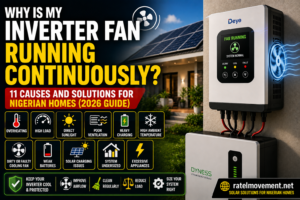
A solar inverter is usually quiet when everything is working properly. That is why many homeowners become concerned when the inverter suddenly starts beeping continuously.
In some cases, the beeping happens every few minutes. In other situations, the alarm refuses to stop entirely. While the sound can be frustrating, it is important to understand that the inverter is trying to communicate a problem.
The good news is that continuous beeping does not always mean your inverter is damaged. Many inverter alarms are caused by issues such as low battery voltage, excessive load, overheating, poor wiring connections, or charging problems. Understanding the cause can help you fix the issue quickly and prevent expensive repairs.
This guide explains the most common reasons solar inverters beep continuously and the practical steps Nigerian homeowners can take to solve the problem.
What Does Inverter Beeping Mean?
An inverter alarm is a warning system designed to alert users when the system detects abnormal conditions.
Different inverter brands use different alarm patterns, but most alarms are triggered by:
- Low battery voltage
- Overload conditions
- Overheating
- Charging problems
- Battery faults
- Grid voltage issues
- Internal system faults
Continuous beeping should never be ignored because prolonged operation under fault conditions can damage batteries, reduce inverter lifespan, or cause system shutdowns. Common inverter alarms are often linked to low battery voltage, overload conditions, overheating, or battery-related faults.
Cause #1: Low Battery Voltage
Low battery voltage is one of the most common reasons solar inverters begin beeping. When battery charge falls below a safe threshold, the inverter activates an alarm to prevent excessive battery discharge.
Signs include:
- Continuous or periodic beeping
- Battery indicator showing low charge
- Reduced backup time
- Inverter switching off unexpectedly
How to Fix It
Start by checking the battery charge level.
If the batteries are low:
- Reduce appliance usage
- Allow solar panels to recharge the batteries
- Connect grid charging if available
- Turn off unnecessary loads
If the problem occurs frequently, your battery bank may be undersized for your electricity consumption.
To calculate the correct battery capacity, read:
Cause #2: Inverter Overload
An inverter overload occurs when the connected appliances demand more power than the inverter can safely provide. Overload is one of the most common causes of inverter alarms and continuous beeping.
Example:
A 2.5kVA inverter attempting to run:
- Air conditioner
- Refrigerator
- Freezer
- Water pump
- Television
simultaneously may exceed its capacity.
Signs of Overload
- Continuous alarm
- Inverter shutdown
- Fault code display
- Appliances switching off
How to Fix It
Disconnect some appliances and monitor the inverter.
If the beeping stops, the load is too high.
You may need:
- Larger inverter capacity
- Better load management
- Additional system upgrades
For inverter sizing guidance, read:
Cause #3: Battery Problems
Sometimes the batteries themselves are the problem rather than the inverter.
Common battery issues include:
- Old batteries
- Weak cells
- Sulphation
- Poor charging
- Loose terminals
Battery-related problems frequently trigger inverter alarms and warning beeps.
How to Check
Look for:
- Swollen batteries
- Corrosion around terminals
- Leakage
- Uneven voltage readings
If your batteries are several years old and backup time has reduced significantly, replacement may be necessary.
Cause #4: Overheating
Solar inverters generate heat during operation. When temperatures exceed safe limits, many inverters activate warning alarms and may even shut down automatically. Overheating can result from blocked ventilation, dusty fans, poor airflow, or installation in hot enclosed spaces.
Common Causes of Overheating
- Poor ventilation
- Dust accumulation
- Faulty cooling fans
- Installation in enclosed spaces
- Direct sunlight exposure
How to Fix It
Check that:
- Air vents are clear
- Cooling fans are working
- The inverter is not exposed to direct heat
- Dust is cleaned regularly
A cooler operating environment improves inverter performance and lifespan.
Cause #5: Poor Solar Charging
Your batteries may not be receiving sufficient charging power from the solar panels.
Possible reasons include:
- Dirty solar panels
- Shading
- Damaged panels
- Faulty charge controller
- Poor wiring
Insufficient solar input and charging problems can trigger inverter alarms and battery warnings.
How to Fix It
Inspect your solar array for:
- Dust
- Bird droppings
- Tree shading
- Damaged wiring
Cleaning panels and improving sunlight exposure can significantly improve charging performance.
Cause #6: Loose or Corroded Connections
Electrical connections loosen over time due to vibration, heat expansion, and environmental conditions.
Loose battery connections can trigger alarms, charging problems, and intermittent faults. Corroded terminals are another common cause of inverter issues.
What to Check
Inspect:
- Battery terminals
- DC cables
- Solar panel connections
- Inverter input terminals
If corrosion is present, clean the affected terminals and ensure all connections are secure.
Cause #7: Grid Voltage Problems
Hybrid inverters connected to PHCN electricity often beep when grid voltage becomes unstable.
Common issues include:
- Low voltage
- High voltage
- Frequent power fluctuations
- Sudden outages
Unstable grid power can cause inverters to switch operating modes repeatedly and trigger alarm sounds.
Solution
Use:
- Voltage protection devices
- Automatic voltage regulators
- Proper surge protection
These devices help protect both the inverter and connected appliances.
Common Error Codes
Different brands use different fault codes, but the table below covers many common alarms.
| Error Type | Possible Cause |
|---|---|
| Low Voltage | Battery discharge |
| Overload | Excessive appliance load |
| High Voltage | Charging problem |
| Over Temperature | Poor ventilation |
| Fan Error | Cooling fan failure |
| Battery Fault | Battery problem |
| PV Fault | Solar charging issue |
Always check your inverter manual for the exact meaning of displayed fault codes.
How to Prevent Inverter Beeping Problems
Preventive maintenance reduces the chances of unexpected alarms.
Recommended maintenance practices include:
- Cleaning solar panels regularly
- Checking battery terminals monthly
- Keeping the inverter in a ventilated location
- Monitoring battery health
- Avoiding overload conditions
- Updating system settings when required
Routine maintenance often prevents most common inverter faults.
When Should You Call a Technician?
Some issues can be handled easily by homeowners.
However, professional assistance is recommended if:
- The alarm continues after troubleshooting
- Fault codes persist
- Batteries are overheating
- Burning smells are present
- Internal inverter faults appear
- Wiring damage is suspected
Attempting complex electrical repairs without proper training can be dangerous.
Related Solar Guides
If you are troubleshooting your system, these guides may also help:
External Resource
For general information on solar energy systems and equipment, visit:
Frequently Asked Questions
Why does my inverter beep at night?
The most common reason is low battery voltage. Batteries may have discharged below the inverter’s safe operating threshold.
Can overload cause continuous beeping?
Yes. Many inverters activate alarms when appliance demand exceeds inverter capacity.
Is inverter beeping dangerous?
Not always, but it should never be ignored because it indicates a system fault that needs attention.
Can a bad battery make the inverter beep?
Yes. Weak, damaged, or poorly charged batteries frequently trigger inverter alarms.
How do I stop my inverter from beeping?
Identify the cause first. Common solutions include charging batteries, reducing load, improving ventilation, cleaning solar panels, or repairing faulty components.
Final Thoughts
A continuously beeping inverter is not necessarily a sign of major failure, but it is always a warning that something requires attention. In most Nigerian solar systems, the problem is usually related to low battery voltage, overload conditions, overheating, charging problems, or poor connections.
By understanding these common causes and acting quickly, homeowners can prevent system damage, extend equipment lifespan, and maintain reliable solar power throughout the year.