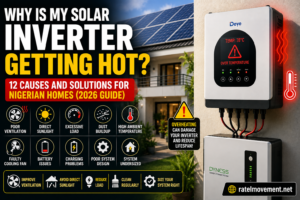
Many solar system owners become concerned when they notice that their inverter fan never seems to stop running.
The fan starts in the morning and continues throughout the day. Sometimes it even runs late into the night.
This often raises questions such as:
- Is the inverter overheating?
- Is there a fault inside the inverter?
- Are the batteries bad?
- Is the inverter overloaded?
- Is continuous fan operation normal?
The good news is that a constantly running inverter fan is not always a sign of a serious problem. In many cases, it simply means the inverter is working hard and trying to keep its internal components cool.
However, there are situations where continuous fan operation indicates an underlying issue that should be investigated.
This guide explains the most common reasons an inverter fan runs continuously and how to fix the problem.
Is It Normal for an Inverter Fan to Run?
Yes.
Most modern hybrid and solar inverters contain cooling systems designed to regulate internal temperature.
The fan automatically activates when:
- Internal temperatures rise
- Battery charging increases
- Heavy loads are connected
- Environmental temperatures become high
Occasional fan operation is completely normal.
The concern begins when the fan never seems to stop.
1. Your Inverter Is Working Under Heavy Load
This is the most common reason an inverter fan runs continuously.
The more electricity the inverter delivers, the more heat it generates.
Common high-load appliances include:
- Air conditioners
- Water pumps
- Freezers
- Refrigerators
- Microwaves
As load increases, cooling demand also increases.
If your inverter frequently powers multiple heavy appliances simultaneously, review why solar inverters overload because overload conditions often force cooling fans to operate continuously.
2. The Inverter Is Getting Too Hot
Continuous fan operation is often a response to excessive heat.
When temperatures remain elevated, the cooling system keeps running in an attempt to prevent thermal shutdown.
If the inverter casing feels unusually hot, investigate why solar inverters get hot because overheating and constant fan operation are closely related.
Common Signs
- Warm or hot casing
- Temperature warnings
- Reduced performance
- Shutdowns during hot afternoons
3. Poor Ventilation
Many inverters are installed in locations with limited airflow.
Examples include:
- Small utility rooms
- Cupboards
- Under staircases
- Storage areas
Poor airflow traps heat around the inverter.
As temperatures rise, the fan works harder and longer.
Solution
- Improve airflow
- Create ventilation openings
- Move obstructions away from the inverter
4. Direct Sunlight Is Heating the Inverter
An inverter exposed to direct sunlight must deal with:
- Internal heat generation
- External environmental heat
This often causes the cooling fan to run continuously.
Solution
Install the inverter:
- Indoors
- Under shade
- Away from direct afternoon sunlight
5. Air Conditioners Are Increasing System Stress
Air conditioners place significant demand on solar systems.
Many homeowners notice constant fan operation shortly after installing cooling units.
If your system powers air conditioners, understanding how to size solar panels for air conditioners in Nigeria can help determine whether your installation is properly designed.
6. Batteries Are Charging Heavily
Charging large battery banks generates heat.
The inverter often increases cooling during:
- Bulk charging
- Fast charging
- Recovery charging
This is especially common in systems with large lithium battery banks.
If charging takes unusually long, review why solar batteries charge very slowly because charging inefficiencies often increase inverter workload.
7. Solar Panels Are Not Producing Enough Energy
A struggling solar system often forces the inverter to work harder.
Common causes include:
- Dirty panels
- Shading
- Damaged wiring
- Faulty components
If charging performance seems poor, investigate why solar panels are not charging batteries properly.
8. Your Batteries Are Weak
Weak batteries create voltage instability.
The inverter compensates by working harder to maintain stable output.
This additional effort produces more heat.
If your batteries discharge unusually quickly, review why solar batteries drain so fast.
Similarly, if the inverter frequently reports low voltage, understanding why an inverter shows low battery even after charging can help identify the problem.
9. Your Battery Bank Is Too Small
Undersized battery storage forces the inverter to work under more demanding conditions.
Many homeowners discover that continuous fan operation improves after upgrading battery capacity.
To determine whether your batteries are adequate, learn how to calculate battery capacity for your solar system.
If your installation uses a 5kVA inverter, reviewing how many batteries a 5kVA inverter actually requires can be particularly helpful.
10. Your Home Has Outgrown the Solar System
Many solar systems are installed for current needs only.
Over time, homeowners add:
- Additional televisions
- Refrigerators
- Freezers
- Pumps
- Air conditioners
The inverter must work harder to support the increased demand.
Families living in larger homes should compare their setup with the recommendations in this guide on solar systems for 4-bedroom houses in Nigeria.
Likewise, households running refrigeration equipment may benefit from reviewing the best solar setup for a refrigerator, TV and fan.
11. The Entire System Is Poorly Sized
A balanced solar installation requires:
- Adequate solar panels
- Proper inverter sizing
- Sufficient battery storage
- Accurate load calculations
Poorly designed systems frequently run hotter than necessary.
Homeowners can evaluate their setup using the solar system sizing calculator for Nigerian homes.
If you’re unsure whether your solar array is large enough, compare your installation against how many solar panels are needed for a 3-bedroom house in Nigeria.
Other Problems Commonly Seen Alongside Continuous Fan Operation
A constantly running fan often appears alongside other inverter issues.
For example:
- Overload alarms
- Battery warnings
- Unexpected shutdowns
- Frequent mode switching
If your inverter shuts down unexpectedly, investigate why an inverter shuts down suddenly.
If it regularly changes power sources, understanding why an inverter keeps switching to battery mode may reveal related problems.
And if warning sounds have become common, review why solar inverters beep continuously.
Quick Diagnosis Table
| Symptom | Most Likely Cause |
|---|---|
| Fan runs only during daytime | Normal cooling |
| Fan runs constantly | High temperature |
| Fan runs with overload alarm | Excessive load |
| Fan runs after adding appliances | System expansion |
| Fan runs with low battery warnings | Battery issue |
| Fan runs during charging | Heavy charging cycle |
Frequently Asked Questions
Is it bad if my inverter fan runs all the time?
Not always. It may simply indicate that the inverter is working hard or operating in a warm environment.
Can overheating cause continuous fan operation?
Yes. Overheating is one of the most common reasons inverter fans run continuously.
Should I turn off the fan?
No. The cooling system protects the inverter from heat damage.
Can weak batteries cause the fan to run more often?
Yes. Weak batteries often force the inverter to work harder, increasing heat production.
When should I be concerned?
If continuous fan operation is accompanied by overheating, shutdowns, alarms, or reduced performance, further investigation is recommended.
Final Thoughts
A continuously running inverter fan is usually a symptom rather than a fault. In many cases, it simply indicates that the inverter is working hard to manage heat generated by charging, appliance loads, or environmental conditions.
By identifying the underlying cause and correcting it early, homeowners can improve system efficiency, extend inverter lifespan, and reduce the likelihood of more serious problems developing in the future.