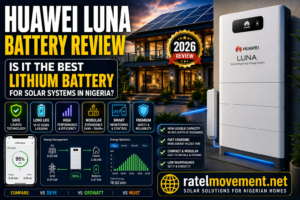
Lithium batteries have rapidly become the preferred choice for solar installations in Nigeria.
Just a few years ago, most homeowners relied on tubular batteries. Today, lithium batteries dominate new solar installations because they charge faster, last longer, require little maintenance, and deliver significantly better performance.
However, with dozens of brands now available in the Nigerian market, choosing the right lithium battery can be confusing.
Should you buy Dyness?
Is Felicity worth the money?
How does Pylontech compare to Huawei?
Which lithium battery offers the best value in Nigeria?
This guide answers those questions and helps you choose the best lithium battery for your solar system in 2026.
Why Lithium Batteries Are Replacing Tubular Batteries
Many Nigerians are moving away from traditional lead-acid batteries for several reasons.
Advantages of Lithium Batteries
- Faster charging
- Longer lifespan
- Higher efficiency
- Deeper discharge capability
- Lower maintenance
- Compact size
- Better inverter compatibility
Lithium vs Tubular Battery Comparison
| Feature | Lithium Battery | Tubular Battery |
|---|---|---|
| Lifespan | 8–15 Years | 3–6 Years |
| Charging Speed | Fast | Slow |
| Maintenance | None | Regular |
| Usable Capacity | 90–95% | 50–60% |
| Weight | Light | Heavy |
| Efficiency | High | Moderate |
For homeowners planning long-term solar investments, lithium batteries often provide better value despite the higher upfront cost.
What Size Lithium Battery Do You Need?
Before comparing brands, determine how much battery storage your home requires.
Many buyers make the mistake of purchasing batteries before calculating actual electricity consumption.
Learning how to calculate battery capacity for your solar system helps prevent expensive sizing mistakes.
For example:
| Daily Consumption | Recommended Battery Storage |
|---|---|
| 5kWh | 5–7kWh |
| 10kWh | 10–15kWh |
| 15kWh | 15–20kWh |
1. Dyness Lithium Batteries
Dyness has become one of the most respected lithium battery brands in Nigeria.
Pros
- Excellent reliability
- Long cycle life
- Strong inverter compatibility
- Popular among professional installers
Cons
- Premium pricing
- Limited availability in some locations
Best For
- Residential solar systems
- Hybrid inverter installations
- Long-term investment
Typical Price Range (2026)
₦1.8 million – ₦4.5 million+
Depending on capacity.
2. Felicity Lithium Batteries
Felicity remains one of the most popular brands among Nigerian homeowners.
Pros
- Competitive pricing
- Good local support
- Widely available
Cons
- Performance varies across product lines
Best For
- Mid-range solar installations
- Budget-conscious homeowners
Typical Price Range
₦1.2 million – ₦3.8 million+
3. Pylontech Lithium Batteries
Pylontech is widely regarded as one of the global leaders in residential energy storage.
Pros
- Excellent reputation
- Proven reliability
- Strong hybrid inverter support
Cons
- Higher initial cost
Best For
- Premium solar systems
- Large residential installations
Typical Price Range
₦2 million – ₦5 million+
4. Huawei LUNA Batteries
Huawei has expanded aggressively into the solar storage market.
Pros
- Premium design
- High efficiency
- Excellent integration
Cons
- Expensive
- Often used in premium installations
Best For
- Smart homes
- High-end residential systems
5. Deye Lithium Batteries
Deye batteries pair exceptionally well with Deye hybrid inverters.
Pros
- Excellent compatibility
- Growing installer support
- Reliable performance
Cons
- Availability varies by region
Best For
- Deye-based solar systems
6. Hubble Lithium Batteries
Hubble has gained popularity due to strong performance and affordability.
Pros
- Good value
- Reliable performance
- Strong cycle life
Cons
- Smaller dealer network
Which Lithium Battery Lasts the Longest?
Expected lifespan depends on:
- Usage patterns
- Charging quality
- Environmental conditions
- System design
Typical lifespan:
| Brand Category | Expected Lifespan |
|---|---|
| Premium Lithium | 10–15 Years |
| Mid-Range Lithium | 8–12 Years |
| Budget Lithium | 5–10 Years |
A properly designed solar system plays a major role in battery longevity.
Homeowners can avoid common design mistakes by using the solar system sizing calculator for Nigerian homes.
How Many Lithium Batteries Do You Need?
This depends on:
- Inverter size
- Daily consumption
- Backup requirements
For example, homeowners using 5kVA systems should first understand how many batteries a 5kVA inverter actually requires before purchasing battery storage.
Many battery problems originate from incorrect sizing rather than poor battery quality.
Signs You Need More Battery Storage
Common warning signs include:
- Batteries not lasting until morning
- Frequent low-battery warnings
- Reduced backup time
- Unexpected shutdowns
If your batteries struggle overnight, investigate why solar batteries may not last through the night.
Similarly, homeowners experiencing rapid discharge should review why solar batteries drain so fast.
Lithium Battery Prices in Nigeria (2026)
Estimated market pricing:
| Battery Capacity | Typical Price Range |
|---|---|
| 2.5kWh | ₦800,000 – ₦1.5 Million |
| 5kWh | ₦1.5 Million – ₦3 Million |
| 10kWh | ₦3 Million – ₦6 Million |
| 15kWh | ₦5 Million – ₦9 Million |
Actual pricing varies depending on:
- Brand
- Exchange rates
- Warranty
- Dealer markup
Should You Upgrade from Tubular Batteries?
For many homeowners, the answer is yes.
Lithium batteries offer:
- Better efficiency
- Longer lifespan
- Faster charging
- More usable energy
However, the decision should be based on your specific energy requirements and budget.
Before upgrading, it’s worth understanding the full solar installation cost in Nigeria so that battery upgrades can be planned properly.
Which Lithium Battery Is Best for a 3-Bedroom House?
The answer depends on electricity consumption.
A typical 3-bedroom house often requires:
- 5kWh–15kWh battery storage
depending on appliances and usage patterns.
Homeowners should compare their requirements against how many solar panels are needed for a 3-bedroom house in Nigeria because battery sizing and panel sizing must work together.
Best Lithium Battery Brands in Nigeria (2026 Ranking)
Tier 1 (Premium)
- Pylontech
- Dyness
- Huawei LUNA
Tier 2 (Excellent Value)
- Deye
- Felicity
- Hubble
Tier 3 (Budget Options)
- Generic Imported Lithium Batteries
Frequently Asked Questions
Are lithium batteries better than tubular batteries?
Yes. Lithium batteries generally offer longer lifespan, faster charging, deeper discharge capability, and higher efficiency.
How long do lithium batteries last?
Most quality lithium batteries last between 8 and 15 years.
Which lithium battery brand is best in Nigeria?
Pylontech, Dyness, Huawei, Deye, and Felicity are among the most respected brands currently available.
Are lithium batteries worth the extra cost?
For many homeowners, yes. Lower maintenance and longer lifespan often justify the higher purchase price.
Can I replace my tubular batteries with lithium batteries?
In most cases, yes. However, inverter compatibility should be verified before upgrading.
Final Thoughts
Lithium batteries have transformed residential solar systems in Nigeria. While the upfront cost is higher than tubular batteries, the longer lifespan, superior performance, and reduced maintenance requirements often make them the smarter long-term investment.
When choosing a lithium battery, focus on system sizing, reliability, warranty support, and compatibility with your inverter rather than simply selecting the cheapest option. A properly sized and well-installed lithium battery system can provide reliable solar backup for many years.