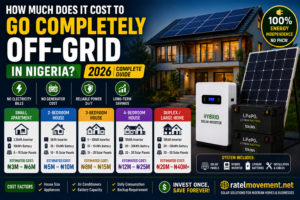
Designing a solar system is not simply a matter of buying an inverter, batteries, and solar panels.
A properly designed solar system should provide:
- Reliable power
- Adequate battery backup
- Fast charging
- Room for future expansion
- Maximum return on investment
Unfortunately, many homeowners in Nigeria install solar systems without proper planning.
The result is often:
- Inverter overloads
- Batteries that don’t last through the night
- Slow charging
- Expensive upgrades later
This guide explains exactly how to design a solar system for your house in Nigeria in 2026.
Step 1: Determine Your Energy Goals
Before buying anything, decide what you want your solar system to achieve.
Basic Backup
Power:
- Lights
- Fans
- Television
- Router
Medium Household Use
Power:
- Refrigerator
- Fans
- TVs
- Lighting
- Small appliances
Full Home Backup
Power:
- Refrigerators
- Freezers
- Water pumps
- Air conditioners
- Most household appliances
Your goals will determine the size of your entire system.
Step 2: Calculate Your Daily Electricity Consumption
Every solar design starts with energy consumption.
Create a list of all appliances you use.
Then calculate:
Power Rating × Hours Used
This determines your daily energy needs.
For a detailed walkthrough, read:
How to Calculate Your Home’s Daily Electricity Consumption
Step 3: Perform a Solar Load Calculation
Load calculation determines how much power your inverter must handle.
Example:
| Appliance | Power Rating |
|---|---|
| Refrigerator | 150W |
| Television | 100W |
| Fan | 75W |
| Router | 15W |
| Lights | 100W |
Total Running Load:
440W
Add a 20–30% safety margin.
This helps determine the correct inverter size.
Read:
Solar Load Calculation for Nigerian Homes: Step-by-Step Guide
Step 4: Choose the Correct Inverter Size
The inverter is the heart of your solar system.
1kVA Inverter
Suitable for:
- Lights
- Fans
- TV
- Router
2.5kVA Inverter
Suitable for:
- Small apartments
- Refrigerator
- Fans
- Television
5kVA Inverter
Suitable for:
- Most 2-bedroom and 3-bedroom homes
10kVA Inverter
Suitable for:
- Large homes
- Duplexes
- Heavy appliance loads
15kVA Inverter
Suitable for:
- Luxury homes
- Multiple air conditioners
- Large families
For appliance examples, read:
What Can a 5kVA, 10kVA and 15kVA Solar System Power?
Step 5: Calculate Battery Storage Requirements
Batteries determine how long your home remains powered at night.
Typical Recommendations
| Home Type | Recommended Battery Storage |
|---|---|
| Small Apartment | 2–5kWh |
| 2-Bedroom House | 5–10kWh |
| 3-Bedroom House | 10–15kWh |
| 4-Bedroom House | 15–20kWh |
| Duplex | 15–30kWh |
Read:
How Much Battery Storage Do I Need for Overnight Backup?
And:
How Many Hours Will a 5kWh, 10kWh and 15kWh Lithium Battery Last?
Step 6: Choose the Number of Solar Panels
Solar panels must generate enough power to:
- Run daytime loads
- Recharge batteries
General recommendations:
| Inverter Size | Solar Panels |
|---|---|
| 1kVA | 2–4 Panels |
| 2.5kVA | 4–8 Panels |
| 5kVA | 8–14 Panels |
| 10kVA | 15–24 Panels |
| 15kVA | 25–40 Panels |
Solar Panel Recommendations by House Type
Two-Bedroom House
Read:
How Many Solar Panels Do I Need for a 2-Bedroom House in Nigeria?
Four-Bedroom House
Read:
How Many Solar Panels Do I Need for a 4-Bedroom House in Nigeria?
Duplex
Read:
How Many Solar Panels Do I Need for a Duplex in Nigeria?
Step 7: Plan for Future Expansion
One of the biggest mistakes homeowners make is designing a system only for current needs.
Many families later add:
- Air conditioners
- Freezers
- Water pumps
- Additional refrigerators
Your design should allow for future growth.
Step 8: Consider Air Conditioners Separately
Air conditioners are usually the largest energy consumers in a home.
A system designed without considering future AC installation often becomes undersized.
Read:
How to Size Solar Panels for Air Conditioners in Nigeria
Example Solar System Designs
Basic Apartment Setup
- 2.5kVA Hybrid Inverter
- 5kWh Lithium Battery
- 4–6 Solar Panels
Can power:
- TV
- Fan
- Lights
- Router
- Small refrigerator
Standard Family Home
- 5kVA Hybrid Inverter
- 10kWh Lithium Battery
- 10–12 Solar Panels
Can power:
- Refrigerator
- TVs
- Fans
- Lights
- Router
- Small freezer
Large Home Setup
- 10kVA Hybrid Inverter
- 20kWh Lithium Battery
- 18–24 Solar Panels
Can power:
- Multiple refrigerators
- Water pumps
- Freezers
- Multiple TVs
Luxury Duplex Setup
- 15kVA Hybrid Inverter
- 30–45kWh Lithium Battery
- 25–40 Solar Panels
Can power:
- Multiple ACs
- Pumps
- Freezers
- Entire household loads
How Much Will It Cost?
Cost depends on:
- Inverter size
- Battery capacity
- Solar panel quantity
- Installation complexity
For pricing, read:
How Much Does a 5kVA, 10kVA, 15kVA Solar System Cost in Nigeria?
Common Solar Design Mistakes
Choosing Inverter Size First
Always calculate load before selecting an inverter.
Underestimating Battery Requirements
Most overnight backup problems result from insufficient storage.
Installing Too Few Solar Panels
This leads to:
- Slow charging
- Poor battery performance
Ignoring Future Expansion
Future-proofing saves money.
Frequently Asked Questions
How Do I Design a Solar System?
Start with:
- Load calculation
- Daily energy consumption
- Battery sizing
- Solar panel sizing
- Inverter selection
Which Comes First: Batteries or Solar Panels?
Battery requirements should be calculated before selecting solar panel quantity.
Is 5kVA Enough for Most Homes?
For many Nigerian 2-bedroom and 3-bedroom houses, yes.
Can I Design a Solar System Myself?
Yes.
However, professional verification is recommended before installation.
What Is the Most Important Step?
Accurate load calculation and energy consumption analysis.
Final Thoughts
Designing a solar system properly requires more than simply buying equipment.
You must calculate your load, determine daily energy consumption, size your batteries correctly, choose the right inverter, and install enough solar panels to support both daytime loads and overnight backup.
A well-designed system provides reliable power, reduces generator dependence, protects your batteries, and saves money for many years to come.